Publication
Some Simple Economics of the Blockchain
Published: Communications of the ACM, Vol. 63, No. 7 (July 2020), pp. 80–90 · DOI: 10.1145/3359552
Abstract
We rely on economic theory to discuss how blockchain technology and cryptocurrencies will influence the rate and direction of innovation. We identify two key costs that are affected by distributed ledger technology:
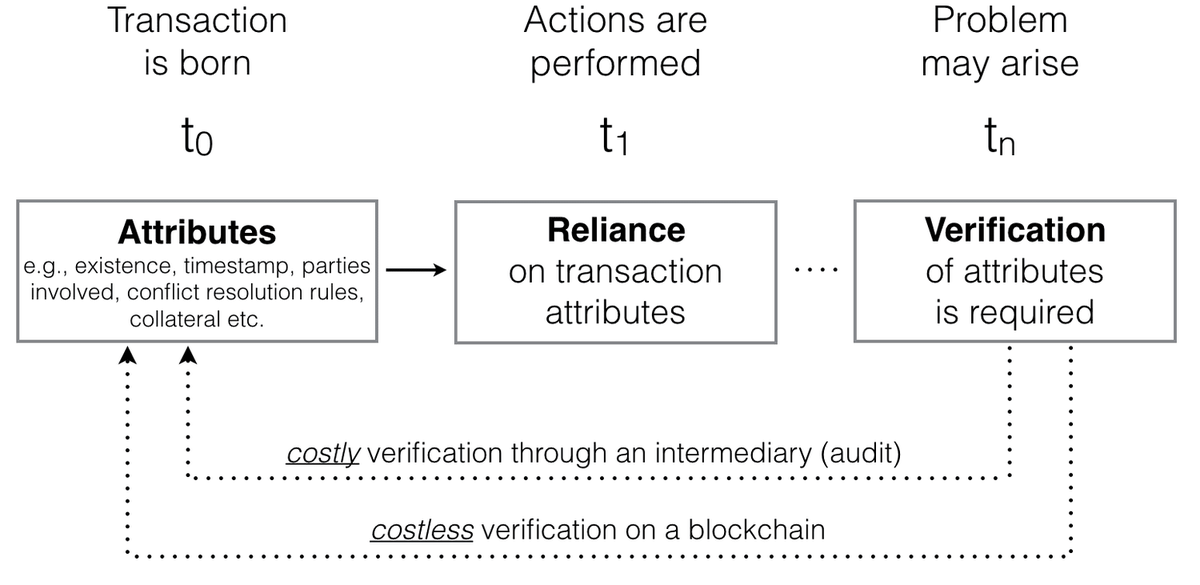
- the cost of verification; and 2) the cost of networking. Markets facilitate the voluntary exchange of goods and services between buyers and sellers. For an exchange to be executed, key attributes of a transaction need to be verified by the parties involved at multiple points in time. Blockchain technology, by allowing market participants to perform costless verification, lowers the costs of auditing transaction information, and allows new marketplaces to emerge. Furthermore, when a distributed ledger is combined with a native cryptographic token (as in Bitcoin), marketplaces can be bootstrapped without the need of traditional trusted intermediaries, lowering the cost of networking. This challenges existing revenue models and incumbents’s market power, and opens opportunities for novel approaches to regulation, auctions and the provision of public goods, software, identity and reputation systems.
Keywords: blockchain, cryptocurrency, market design, tokens, initial coin offerings, ICOs, smart contracts, distributed ledgers, Bitcoin, Ethereum, open source, auctions.